


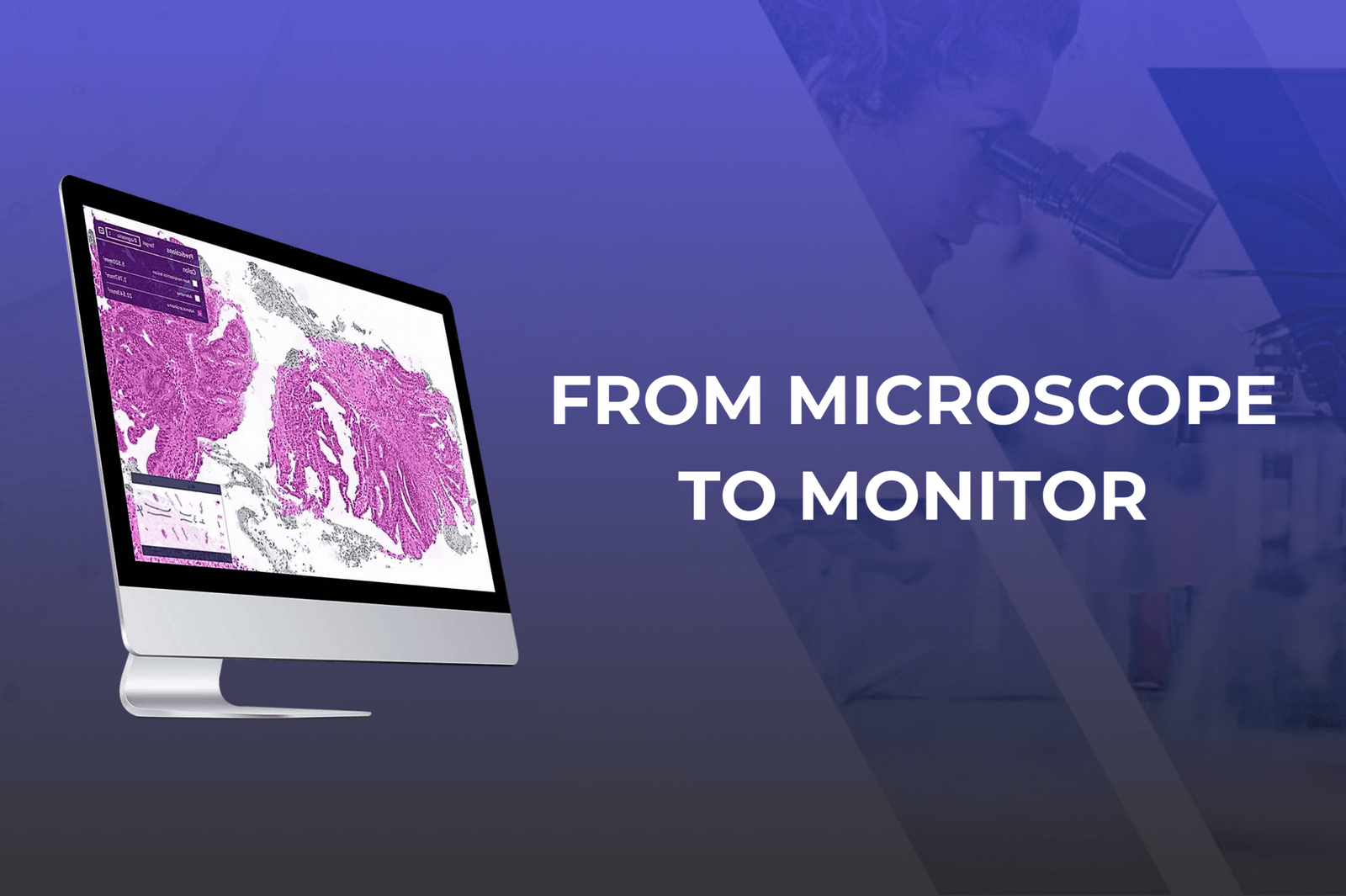
The way we diagnose cancer is changing.
Traditional pathology – where slides are reviewed manually under a microscope – has served healthcare for decades. But with increasing caseloads, the need for faster turnaround, and limited access to expert pathologists, many labs are facing challenges in keeping up.
That’s where digital pathology comes in.
What is Digital Pathology?
Digital pathology uses high-resolution scanners to convert glass slides into digital images. These images can then be viewed, analyzed, and shared on secure platforms – enabling remote access, faster collaboration, and even AI-assisted diagnosis.
Instead of relying on one specialist in one location, digital pathology allows multiple experts to review cases, offer second opinions, and work more efficiently – all from their own screens.
Why Are Labs Making the Switch?
✅ Faster results
Turnaround times improve as cases can be prioritized, shared instantly, and reviewed remotely.
✅ Better collaboration
Slides can be accessed by teams in different departments or even different cities, allowing for faster and more informed decisions.
✅ AI support
Advanced platforms, like Pidport, integrate AI tools that assist with cancer detection and highlight potential problem areas – helping pathologists save time and reduce error.
✅ Scalability and storage
Digital slides don’t degrade and can be securely stored in the cloud, making long-term archiving and access easier than ever.
The Alfadiag Approach
At Alfadiag, we partner with leading institution to bring digital pathology to clinical practice. Through platforms like Pidport, we can support hospitals and labs in the UAE with smart, scalable, and user-friendly solutions that improve diagnostic workflows – without disrupting existing systems.
With over 16,000 specimens already digitized globally and use across 80+ hospitals, digital pathology is no longer a concept for the future – it’s happening now.